Dry Needling
A targeted technique using thin solid needles to calm overactive muscle tissue, reduce nervous system irritability, and accelerate recovery from chronic and acute musculoskeletal pain.
What Is Dry Needling?
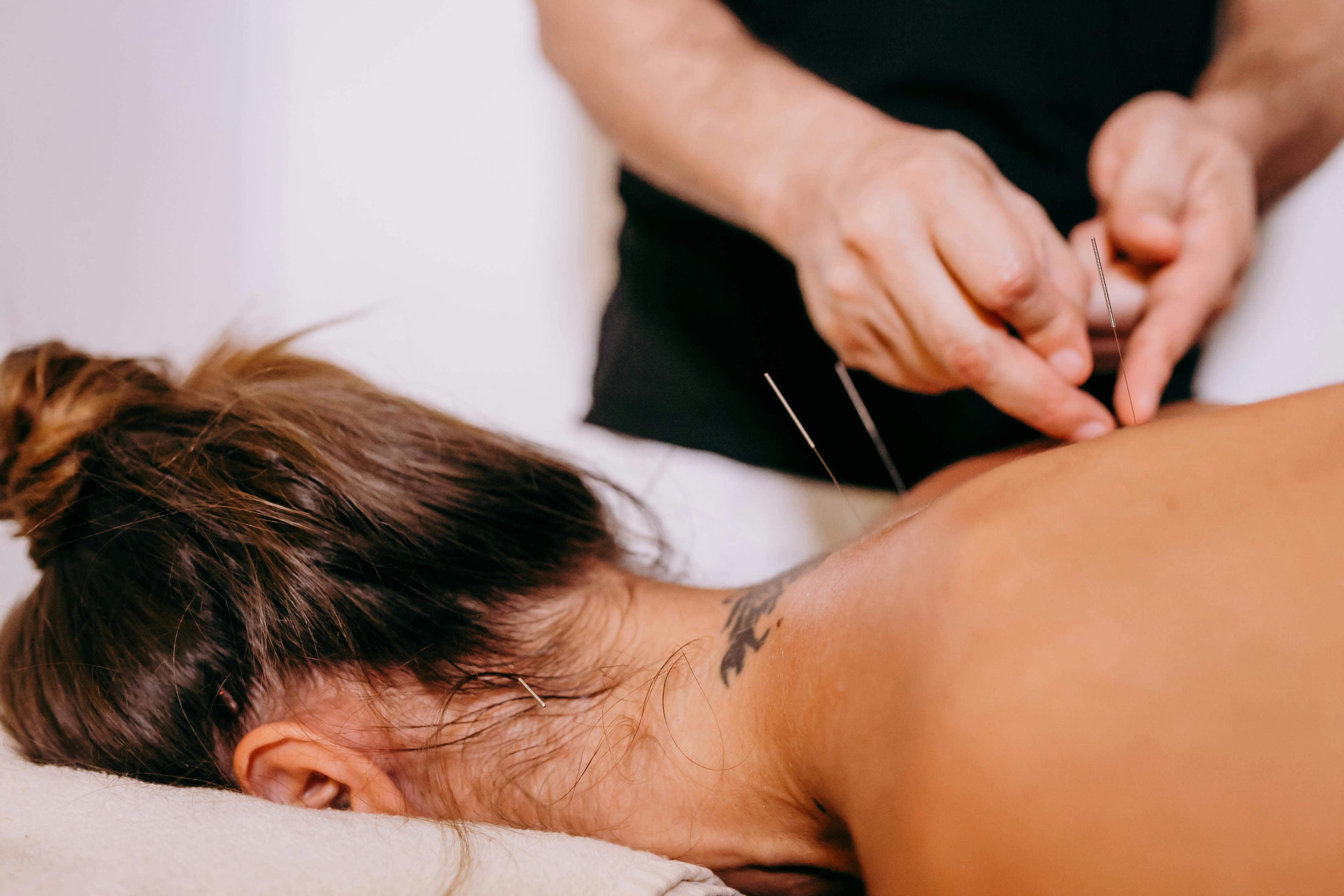
Dry needling uses thin, solid needles — similar to acupuncture needles — inserted directly into muscle tissue or around joints to produce a therapeutic effect. There is no medication in the needle. The effect comes from the body's response to the needle itself: muscles that have been overactive or guarded for a long time tend to relax, the nervous system calms down around the treated area, and circulation improves. It is grounded in Western anatomy and neuroscience — the goal is to reduce the irritability of the tissue and the nervous system signals that are keeping it that way.
What It Treats
Dry needling is most effective when muscles have become persistently overactive, guarded, or sensitized — meaning the nervous system has been sending too many signals to that area for too long. This commonly shows up as chronic neck and shoulder tightness that does not fully resolve with massage alone, hip and glute pain that stays stubborn despite stretching and exercise, Achilles and patellar tendon pain where the surrounding muscle keeps overloading the tendon, and rotator cuff pain where the muscles around the shoulder are guarding and limiting movement. In these cases, dry needling helps calm the tissue down so that hands-on work and exercise can actually get through.

The Evidence Base
The research on dry needling consistently shows it is effective at reducing pain, calming overactive muscle tissue, and improving range of motion in musculoskeletal conditions. Multiple studies and reviews support its use for short-term pain reduction and improving how the nervous system responds to movement. At Reformance, dry needling is used selectively — for the specific cases where the tissue has not responded to manual therapy alone and needs a deeper reset before loading and movement can work.

Clinical Applications of Dry Needling
Dry needling at Reformance will never be a standalone treatment. It is used when a muscle or area has stayed irritated and guarded despite hands-on work — when the nervous system needs a more direct stimulus to settle down. The protocol is simple: needle the area to calm it, then immediately follow with movement and loading while the window is open. The needle resets the tissue. The exercise makes it last. I am fully licensed to perform dry needling in Florida and offer it as part of every appropriate treatment plan.
Muscle Overactivity
Direct needling into muscles that have been overactive and guarded — maintaining pain and limiting range of motion despite other interventions.
Cervical & Thoracic Pain
Targeted needling of the upper trapezius, levator scapulae, and cervical paraspinals — common sources of neck pain, headache, and shoulder referral.
Hip & Glute Complex
Addressing muscle overactivity in the gluteus medius, piriformis, and TFL — frequently implicated in low back pain, hip impingement, and ITB syndrome.
Post-Needling Window
Using the immediate post-needling reduction in muscle tension to drive corrective exercise and movement re-education more effectively.
Ready to Add Dry Needling?
Book a free evaluation and we'll determine whether dry needling is the right tool for your case — and how it fits into a complete treatment plan.
Book Your Free Evaluation