Strength Testing & Dynamometry
Strength testing without actual numbers is just an educated guess. Dynamometry gives us the real data — exactly how strong a muscle is, how it compares to the other side, and whether you are actually ready to return to what you love doing.
The Tindeq Progressor 500
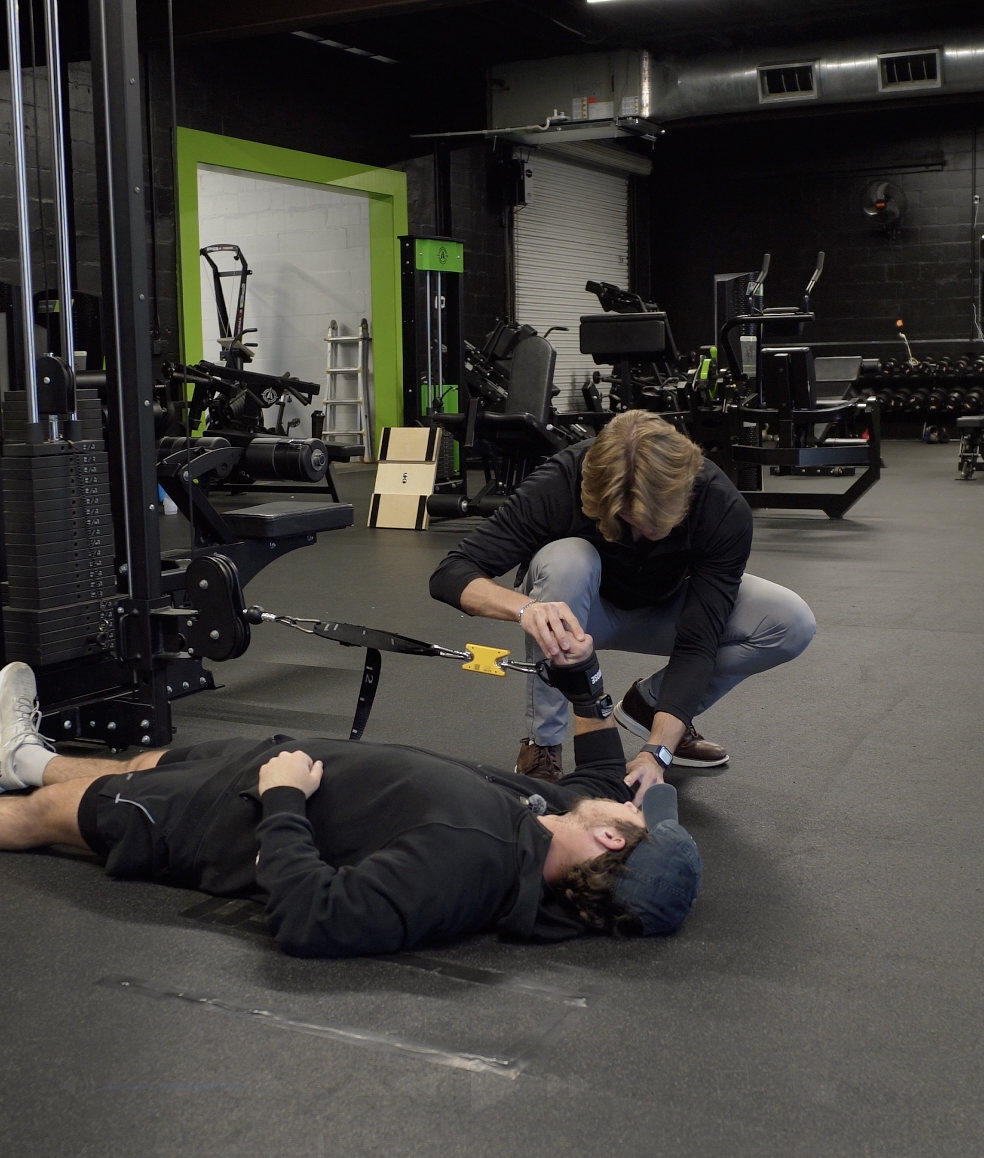
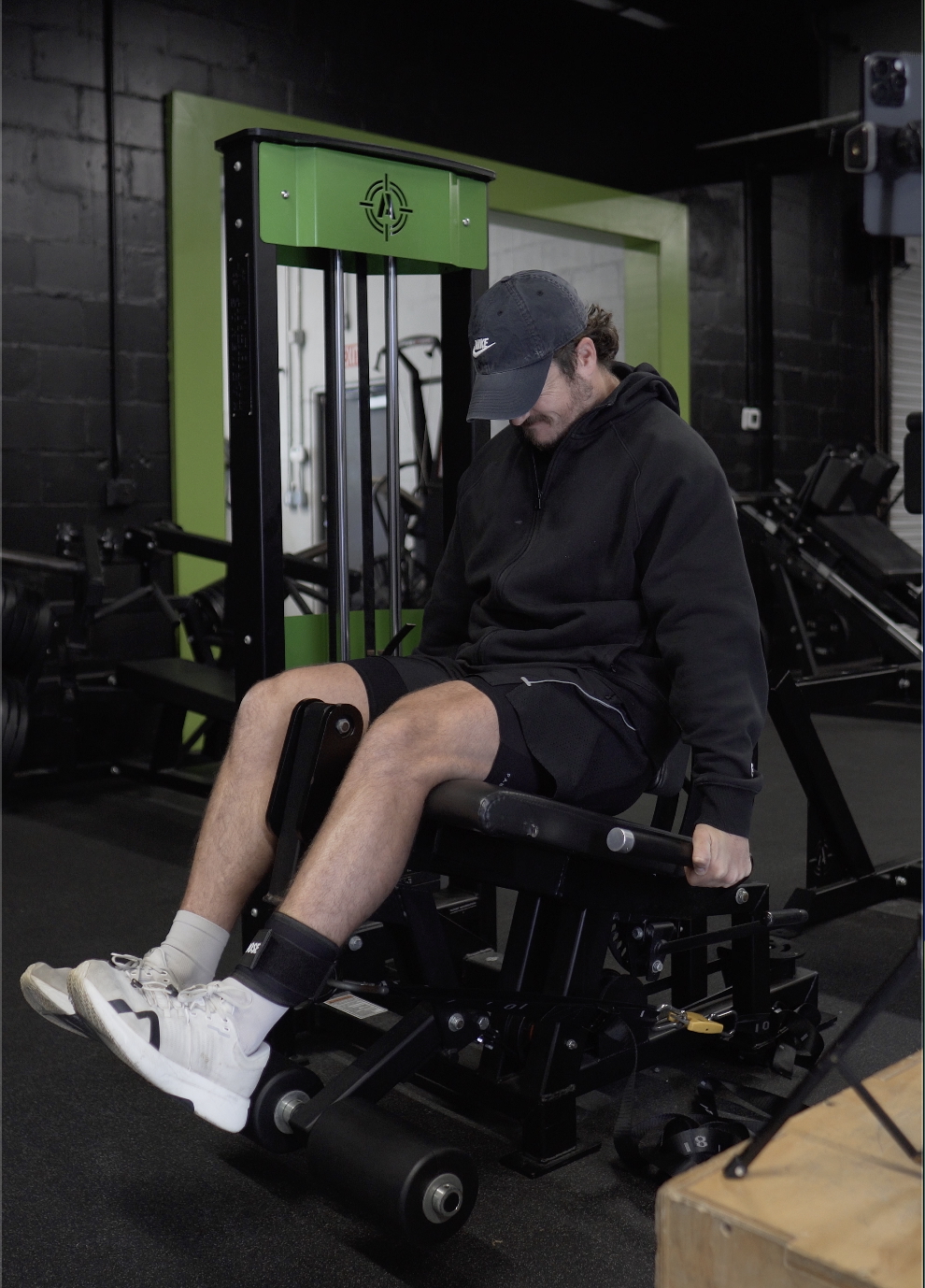
At Reformance, strength is measured using the Tindeq Progressor 500 — a handheld device that connects to a smartphone app and measures exactly how much force a muscle can produce. During testing, you push or pull against the device as hard as you can and the app captures the peak force in real time. Unlike a clinician eyeballing your strength on a scale of one to five, this gives us an actual number — in kilograms of force — that we can track, compare, and use to make decisions. No guessing.
Limb Symmetry Index
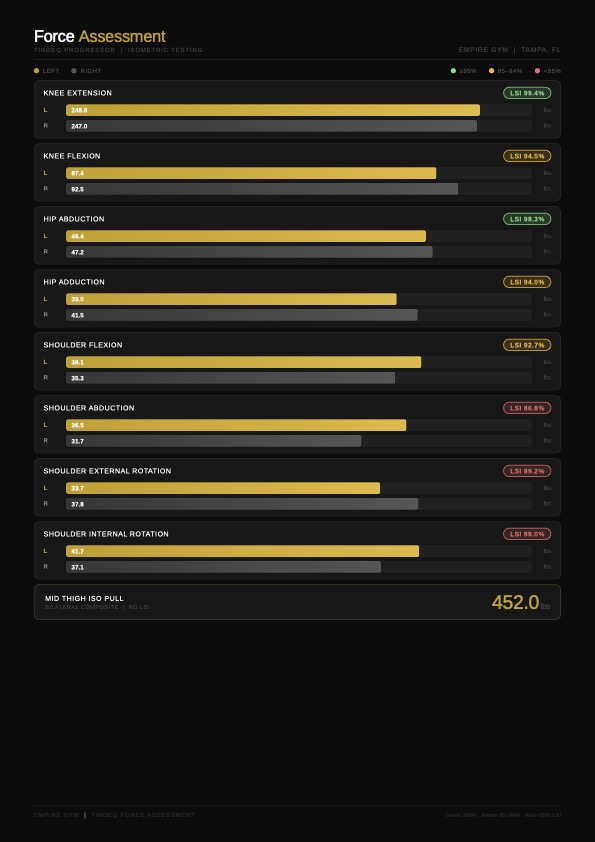
The most important number we track is called the Limb Symmetry Index — or LSI. It is simply the ratio of your injured side to your healthy side, expressed as a percentage. If your healthy leg produces 100 kilograms of force and your injured leg produces 85, your LSI is 85 percent. Research tells us that an LSI below 90 percent significantly increases your risk of re-injury when you return to sport or heavy training. At Reformance, we measure your LSI at the start, track it across sessions, and use it to decide when you are genuinely ready to progress — not when it just feels like you are.
Research-Guided Thresholds
The targets we use are not made up. They come directly from peer-reviewed research on when it is actually safe to return to activity after injury. For ACL rehab, there are established quadriceps strength ratios and symmetry benchmarks that predict re-injury risk. For Achilles and patellar tendon issues, there are normative force values for the calf and quad that guide return-to-load decisions. Your progress is measured against those thresholds — not against how you feel on a given day, and not against a generic timeline. When the numbers say you are ready, you are ready.
Clinical Applications of Dynamometry
Every patient at Reformance gets baseline dynamometry testing before we start. This tells us exactly where you are starting from and sets the target we are working toward. From there, we test regularly so the data tells us whether what we are doing is working, whether it is time to push harder, and whether you are genuinely ready to return to full activity. The numbers keep us honest — and they keep you progressing at the right pace.
Baseline Assessment
Quantified strength testing at intake to establish precise starting points and identify bilateral deficits before programming begins.
Return-to-Sport Clearance
Objective LSI benchmarks to make confident, defensible return-to-sport decisions following surgery or significant injury.
Progress Tracking
Periodic re-testing to document strength gains, adjust programming, and keep clients engaged with real data.
Injury Risk Screening
Strength asymmetry screening for active clients who want to identify and address vulnerabilities before they result in injury.
Know Your Numbers. Train Accordingly.
Strength is a measurable quality. Book a free evaluation and find out exactly where yours stands.
Book Your Free Evaluation